.webp)


How to Choose the Right Stone Crusher for Your Project
July 8, 2025
In the world of construction, mining, infrastructure development, and aggregate production, the stone crusher plays a pivotal role. Whether you're building roads, laying foundations, or recycling materials from demolition sites, choosing the right stone crusher for your specific project is a decision that significantly impacts efficiency, output quality, operating costs, and long-term sustainability.
However, with various types of crushers available—each designed for different material characteristics and project goals—it’s easy to make the wrong decision without expert guidance. This comprehensive guide is designed to help professionals, contractors, and project managers understand how to make the best possible choice when it comes to stone crushers.
Why Choosing the Right Stone Crusher Matters
Selecting the appropriate stone crusher is more than a matter of matching output capacity—it involves evaluating the entire crushing process. A poorly chosen machine may result in underperformance, excessive maintenance, and low return on investment. A correctly chosen one, on the other hand, will reduce downtime, cut energy consumption, improve product uniformity, and boost your bottom line.
The key is understanding your material, your objectives, and how each type of stone crusher operates under real project conditions.
9 Essential Factors to Consider When Choosing a Stone Crusher
Below are 9 critical aspects to evaluate before selecting a stone crusher, each aligned with practical needs on modern job sites. For each factor, we’ll also provide a targeted recommendation.
1. Know Your Raw Material: Stone Crusher Performance Depends on It
Before choosing any stone crusher, the first thing to evaluate is the type of raw material you’re dealing with. Is it soft limestone or hard granite? Is it dry, damp, or sticky? Is the particle size uniform or irregular?
Key considerations:
- Hardness: Use jaw or cone crushers for hard rock; impact crushers for medium-hard materials.
- Moisture: Wet materials may clog traditional impact or hammer crushers.
- Abrasiveness: Some materials wear down parts quickly—choose a crusher with suitable wear protection.
Recommendation:
For hard and abrasive rock like basalt, granite, or quartzite, a cone crusher with manganese steel wear liners is ideal. For softer, brittle material like limestone, consider an impact crusher or hammer crusher.
2. Define Your Desired Output Size: The End Product Shapes the Stone Crusher Choice
Different projects require different output specifications. A road base may need coarser material, while ready-mix concrete production demands well-graded, angular aggregates.
Key considerations:
Primary, secondary, or tertiary crushing?
Do you need a uniform cubical shape?
Are you preparing materials for further screening?
Recommendation:
If you’re producing fine aggregate, opt for impact crushers with adjustable settings. For coarser crushing, a jaw crusher might be sufficient. For tertiary crushing with precise shaping, use a cone crusher or vertical shaft impact crusher (VSI).
3. Choose the Right Type of Stone Crusher for the Job
Understanding the different types of crushers is essential to matching machine functionality to your needs.
Main types of stone crushers:
- Jaw Crusher: Best for primary crushing of hard rock; compressive force breaks material.
- Cone Crusher: Suitable for secondary/tertiary crushing of medium to hard material.
- Impact Crusher: Uses forceful impact to break softer or medium-hard stones.
- Hammer Crusher: Good for brittle materials; less suitable for abrasive rock.
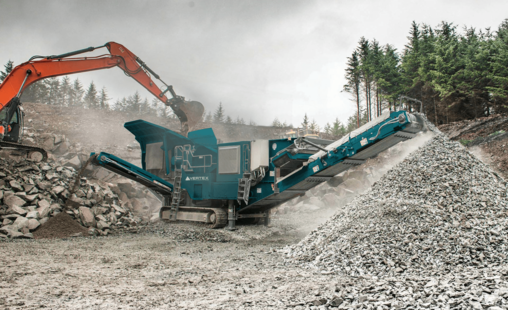
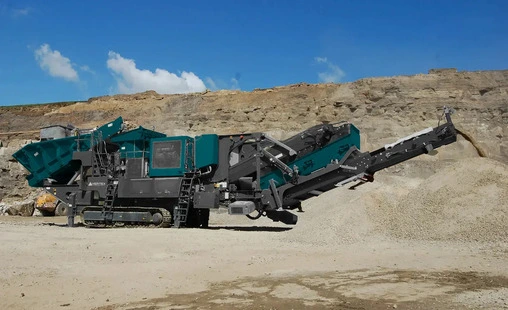
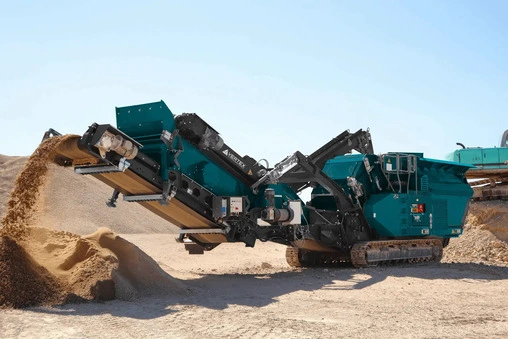
- Mobile Crusher: Offers flexibility for jobs that require relocation or space constraints.
Recommendation:
Select the stone crusher type based on the crushing stage required and material hardness. Mobile crushers are ideal for projects with changing locations or restricted space.
4. Evaluate Your Desired Production Capacity
Understanding your required output in tons per hour (TPH) is fundamental. Underestimating capacity may lead to bottlenecks; overestimating it may result in unnecessary capital investment.
Key considerations:
- How many tons per hour are required?
- Is peak capacity required, or average?
- Will production scale in the future?
Recommendation:
If your production is below 150 TPH, a compact mobile stone crusher may be ideal. For higher outputs, stationary cone or jaw crushers in combination with vibrating screens ensure scalability and performance.
5. Consider the Site Conditions and Space Constraints
A large stationary crusher may offer great power, but it’s useless on a job site with limited space or rough terrain.
Key considerations:
Available space at your site
Terrain conditions (flat, rocky, muddy)
Portability and relocation needs
Recommendation:
For urban demolition, mountain roads, or temporary sites, choose a tracked mobile stone crusher with compact footprint. If the site is stable and permanent, a stationary setup may provide better long-term value.
6. Assess Operating and Maintenance Requirements
A machine is only as good as its uptime. Frequent maintenance, expensive spare parts, and difficult servicing can reduce project efficiency.
Key considerations:
Wear part life cycle and cost
Access to service points
Need for specialized technicians
Recommendation:
Choose a stone crusher with a modular design and easy-to-access service areas. Brands that offer remote monitoring or diagnostics (such as Vertex's newer models) can further reduce downtime.
7. Review Energy Efficiency and Environmental Impact
Modern projects increasingly emphasize sustainability. Selecting a fuel-efficient, low-emission stone crusher is both environmentally and financially beneficial.
Key considerations:
Initial investment
Operating costs over time
Spare parts availability
Resale value
Recommendation:
Calculate total cost of ownership (TCO) over the life of the equipment. Sometimes a higher-end stone crusher offers better ROI due to durability, output quality, and lower fuel consumption.
9. Check for Technical Support and After-Sales Service
No matter how advanced the machine is, reliable service and spare parts availability are crucial for long-term operations.
Key considerations:
Is local service available?
How fast are parts delivered?
Are warranties and training included?
Recommendation:
Work with a stone crusher manufacturer or distributor who provides local technical support, training, and parts logistics. Companies like Vertex, for example, back their machines with field service teams and spare part inventory.
9 Final Tips for Choosing the Right Stone Crusher
Test your material type before final selection.
Never overlook your space limitations on-site.
Always prioritize ease of maintenance.
Ask for case studies from your supplier.
Request a cost-per-ton breakdown.
Consider long-term power costs—especially with mobile crushers.
Avoid over-sizing “just in case”—efficiency matters.
Ensure compliance with local environmental rules.
Choose a supplier who understands your industry.
Choose Your Stone Crusher with Precision
Choosing the right stone crusher is a strategic decision that affects the success of your project across multiple dimensions—efficiency, cost, output quality, mobility, and sustainability. By thoroughly evaluating your material type, production goals, site layout, budget, and support needs, you can make an informed choice that will serve your operations for years to come.
Whether you’re crushing for roads, concrete, mining, or recycling, the key to long-term success lies in pairing the right technology with your specific challenge. And in this, the right stone crusher isn’t just a machine—it’s the foundation of your production line.
Recent articles
- Rock Crushers Unveiled: All the Insider Secrets You Must Know
- Crushing Equipment: An In - Depth Exploration
- Crushed Concrete: The Rise and Application of Sustainable Construction Materials
- Everything You Need to Know about Jaw Crushers and Mobile Jaw Crushers
- Everything You Need to Know About Buying and Renting Rock Crushers